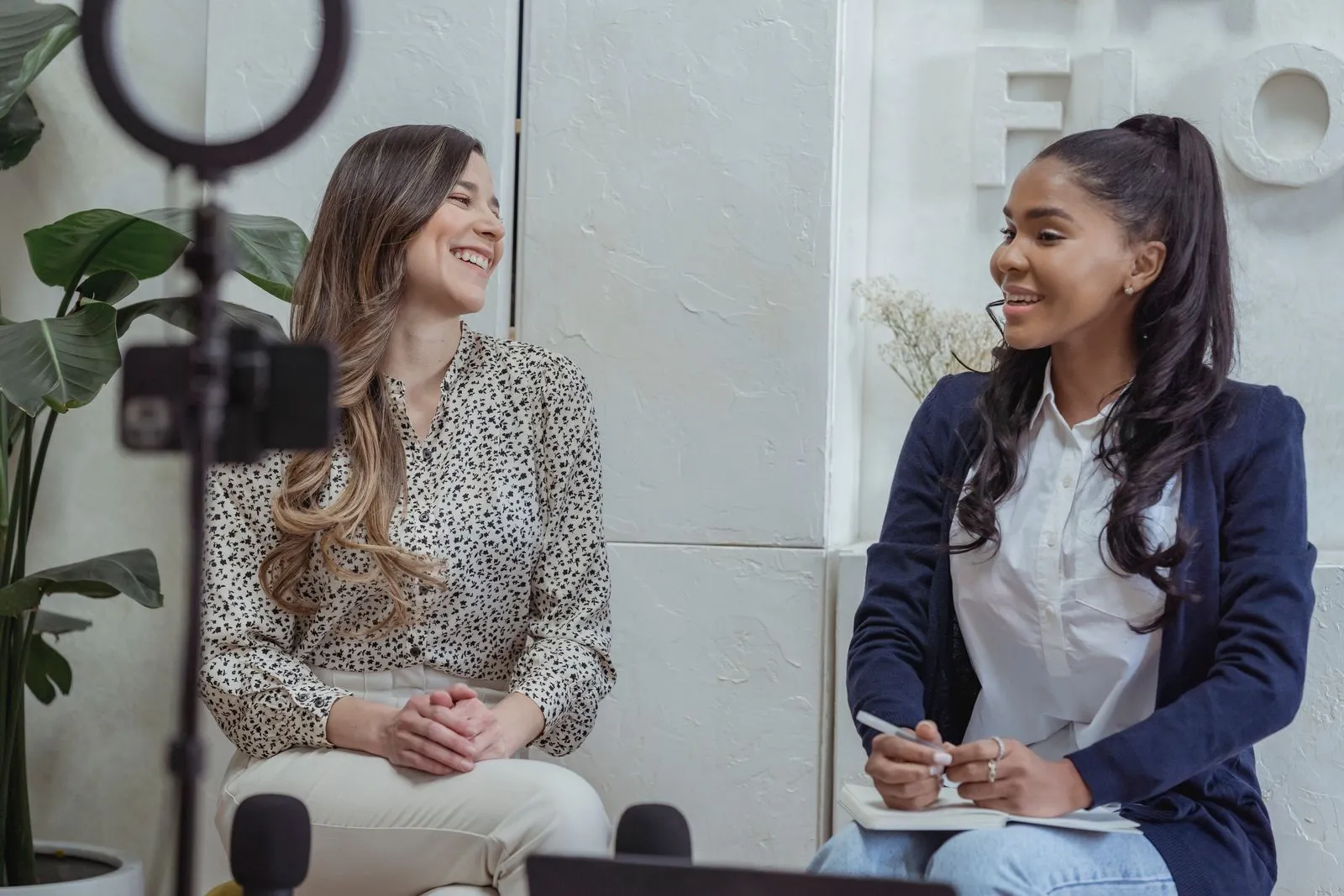
On camera, clothing can look different than it does in person. Lighting, framing, and movement all affect how an outfit reads, while a distracting pattern or uncomfortable fit can make it harder to focus on the conversation. A few practical choices can help you look polished without feeling overstyled. Plan your wardrobe around the setting, test it on camera when possible, and choose pieces that let you speak and move with ease.
Choose colors that read clearly
Mid-tone, solid colors are dependable starting points for interviews. Navy, teal, burgundy, forest green, and muted blue can provide definition without competing with your face. Very bright white may look harsh under strong lights, while all-black clothing can lose detail against a dark background. Consider the set or room before choosing: clothing should contrast with the backdrop rather than blend into it.
Wear colors that suit your complexion and feel consistent with your professional role. Avoid fluorescent shades, which can reflect color onto skin, and test saturated colors under the actual lighting if possible. If you do not know the background in advance, choose a calm, medium-depth color and bring a second option. A quick camera check can reveal whether the garment looks too bright, dull, or close in color to the setting.
Keep patterns and details simple
Fine stripes, tiny checks, and dense repeating prints can create visual distortion on some cameras. This effect may appear as shimmering or wavy lines, especially in a tight shot. Solid fabrics or larger, low-contrast patterns are generally easier to record. If you want to wear a print, check it through the camera at the distance and resolution planned for the shoot.
Small accessories can add personality, but shiny or noisy pieces may draw attention or pick up light. Choose jewelry that stays in place and does not tap against a microphone. Avoid clothing with prominent logos or busy details unless they are relevant to the interview. The goal is not to remove personal style; it is to make sure the outfit supports the message instead of competing with it.
Check fit in the frame
A well-fitting outfit looks composed from the camera’s point of view and lets you sit naturally. Check shoulder seams, sleeve length, and how a jacket closes while seated. Pulling fabric, gaping buttons, or a collar that shifts can become more noticeable in a close shot. If the interview includes standing or walking, test those movements too and make sure the clothing stays in place.
Camera framing changes what matters. In a head-and-shoulders shot, the neckline, collar, and upper layers receive the most attention; in a wider shot, trousers, shoes, and the full silhouette may appear. Sit in the chair you will use and view a test recording, rather than relying only on a mirror. Keep a lint roller and a small clothing fix kit nearby for last-minute adjustments.
Prioritize comfort and preparation
Comfort helps you stay focused through a long interview or repeated takes. Choose breathable fabrics and layers that suit the room temperature, and check that you can sit, gesture, and turn without restriction. Try the complete outfit before shoot day, including shoes and accessories. If a garment needs constant adjusting, choose another option rather than hoping you will forget about it once recording starts.
Prepare a backup top or jacket in a similar color range in case of spills, wrinkles, or a lighting issue. Hang garments during travel and check them shortly before filming. If you are uncertain about choices, a wardrobe stylist can review options against the location, camera framing, and interview format. Princeton Wardrobe Studio can help plan a camera-ready look that feels professional and comfortable.
A strong on-camera outfit combines clear color, restrained patterns, a secure fit, and comfort you can maintain throughout the shoot. Test your choices in the room and framing you expect, then keep a simple backup ready. With a little preparation, you can focus on the interview itself. Consider consulting a wardrobe stylist if you want help coordinating the details.